Zengővárkony’s Survivor: A Sweet Chestnut Tested by Time
A Tree Shaped by History
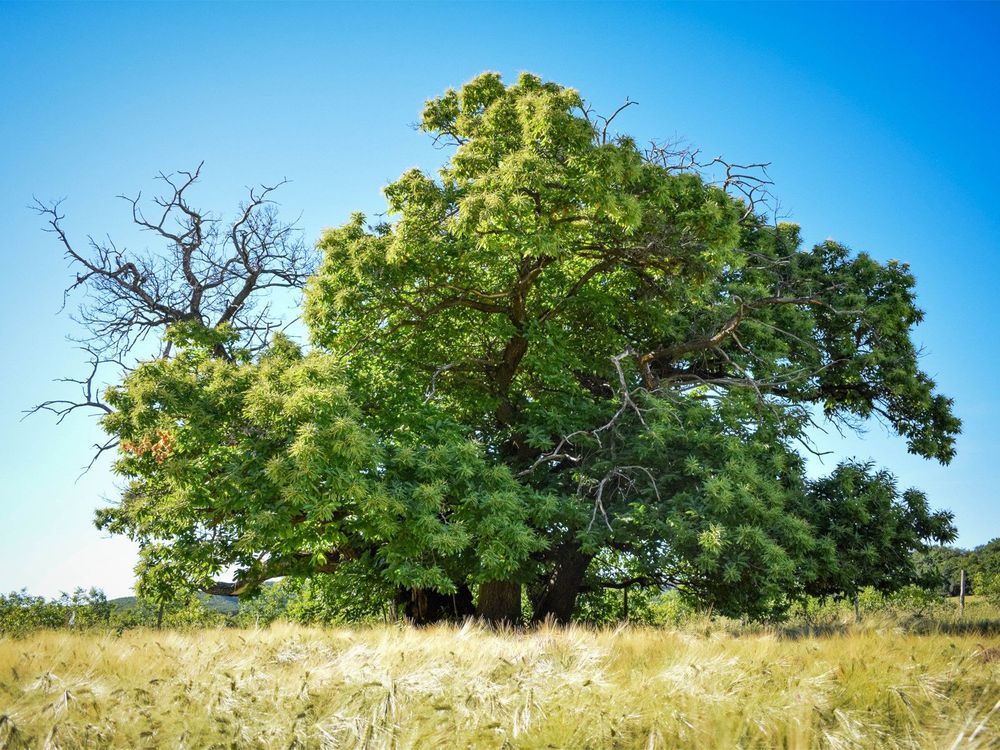
One meets many unforeseen challenges throughout life. This sweet chestnut tree (Castanea sativa) from the village of Zengővárkony in south-western Hungary knows this all too well. Standing near an ancient chestnut grove covering more than 60 hectares, it is one of many trees, yet its story sets it apart. Over nearly 300 years, it has witnessed countless moments of human and natural history, but it was the 20th century that tested its strength the most.
When History Leaves Scars
During the collectivisation of the 1950s, the tree was taken from its original owner and incorporated into cooperative farming. While its fruits were harvested, the tree itself was left without proper care. What had once been a privately tended tree became a shared resource, slowly bearing the weight of neglect.
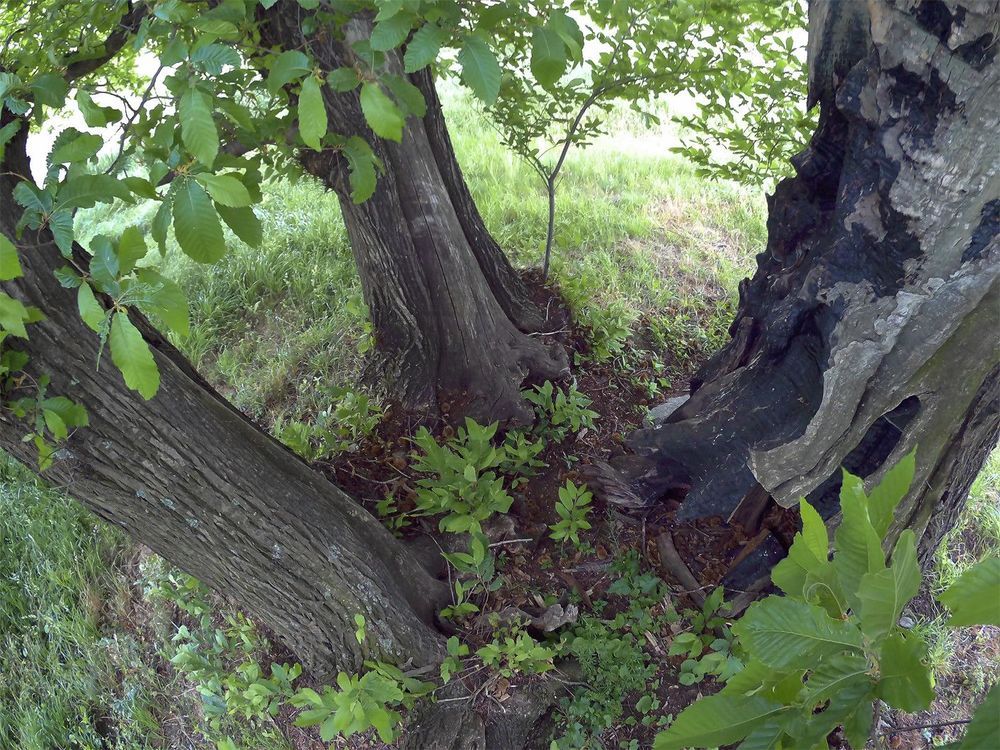
Later, during a harsh winter, the chestnut was deliberately set on fire by a group of soldiers guarding a nearby military shooting range, seeking warmth. Their brief need for heat left lasting scars on the tree — traces of the flames remain visible on its trunk to this day. In the 1970s, the tree was struck by bark canker disease, which at the time devastated large numbers of chestnut trees both in the grove and across Hungary. These wounds marked the tree, even as new layers of healthy bark slowly began to cover them.
A Symbol for a Small Village
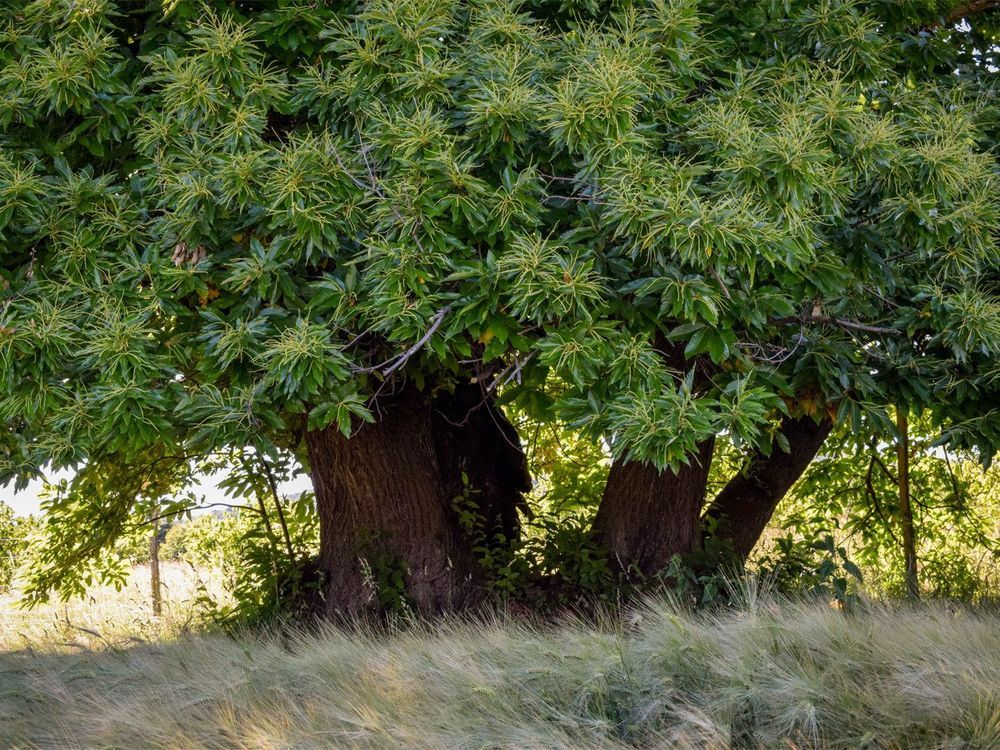
Today, this towering 15-metre tree, shaped and tested by time, consists of four trunks emerging from a single root system. Alongside the old trunk, mature shoots have replaced dead branches, forming a rich and resilient crown, a living testament to renewal and persistence.
For the village of Zengővárkony, home to just over 400 residents, this chestnut has become a symbol of continuity and the courage to endure even the most difficult times. Just as chestnut harvests repeatedly helped secure prosperity for local families, the trees in the grove are now privately owned by farmers who repay them with careful stewardship.
From Local Protection to European Recognition
In 1974, the chestnut grove was declared a protected area and later included in the Natura 2000 network, giving it not only national but also European significance. In recognition of its story and resilience, the tree earned fourth place in the European Tree of the Year competition in 2018, receiving nearly 14,000 votes.
The Hungarian Pécsváradért Foundation, which organised the national Tree of the Year contest in 2017, described it in words that need no further addition:
“The vitality of this chestnut has overcome hardship and survived the storms of history. Even today, it still wants to live — it sprouts, blossoms, and bears fruit, to the joy of us all. It shows the strength of unity; its will to live inspires us, and its example can give strength to those facing illness, as well as to all of us in our everyday struggles.”